
 My organization recently completed a user research project with the User Experience Design group.
This process was extremely effective at bringing the voice of the customer directly into our product development efforts.
My organization recently completed a user research project with the User Experience Design group.
This process was extremely effective at bringing the voice of the customer directly into our product development efforts. Eye-tracking: State-of-the-art usability software
The Usability Lab in Building 6 in Mountain View has acquired a new Tobii eye tracker. Eye-tracking refers to the techniques that allow measurement and recording of eye gaze. The Tobii unit permits unobtrusive recording of eye movements. The sensors are built into the base of the monitor, so there is no bulky headgear or glasses for the user test subject.
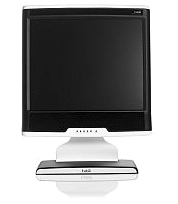
Eye-tracking adds another dimension to usability testing. Normally, we ask the test subject to use the "talk-aloud" method, during which a user is encouraged to say what he or she is thinking during the process. Additionally, we watch mouse movements, keyboard movements, and facial expressions as the user steps through tasks in the usability lab. Now that we have the eye-tracker, we have reduced the need for the user to speak aloud, since we know what they are seeing as they see it.
To try out the eye tracker, we invited a number of VeriSign people to come to the lab to go through a session in which they looked at 10 pictures and performed two simple tasks on a Web site. Although the session was meant to be fun, we discovered some interesting patterns. For example, there was a big difference between the eye gaze patterns of those from the technical organizations versus those from the marketing side of the house. (See the illustrations below.)
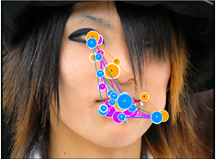
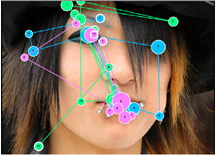
Even the fun eye-tracking sessions helped validate some previous user testing. In earlier usability testing sessions, the team discovered that target users for some products did not veer off task once they had started on the enrollment path. The users told us that they did not want to look at anything on the side and would not look at distractions, although they were willing to learn more later. When we did eye tracking, we discovered that this was true. Our technical users stayed within the task, never looking deliberately at ads, sidebars, or color distractions. This has since been re-confirmed in user testing done since, using more rigorous methodology.

 Back
Back